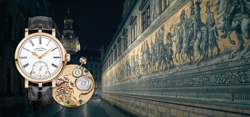








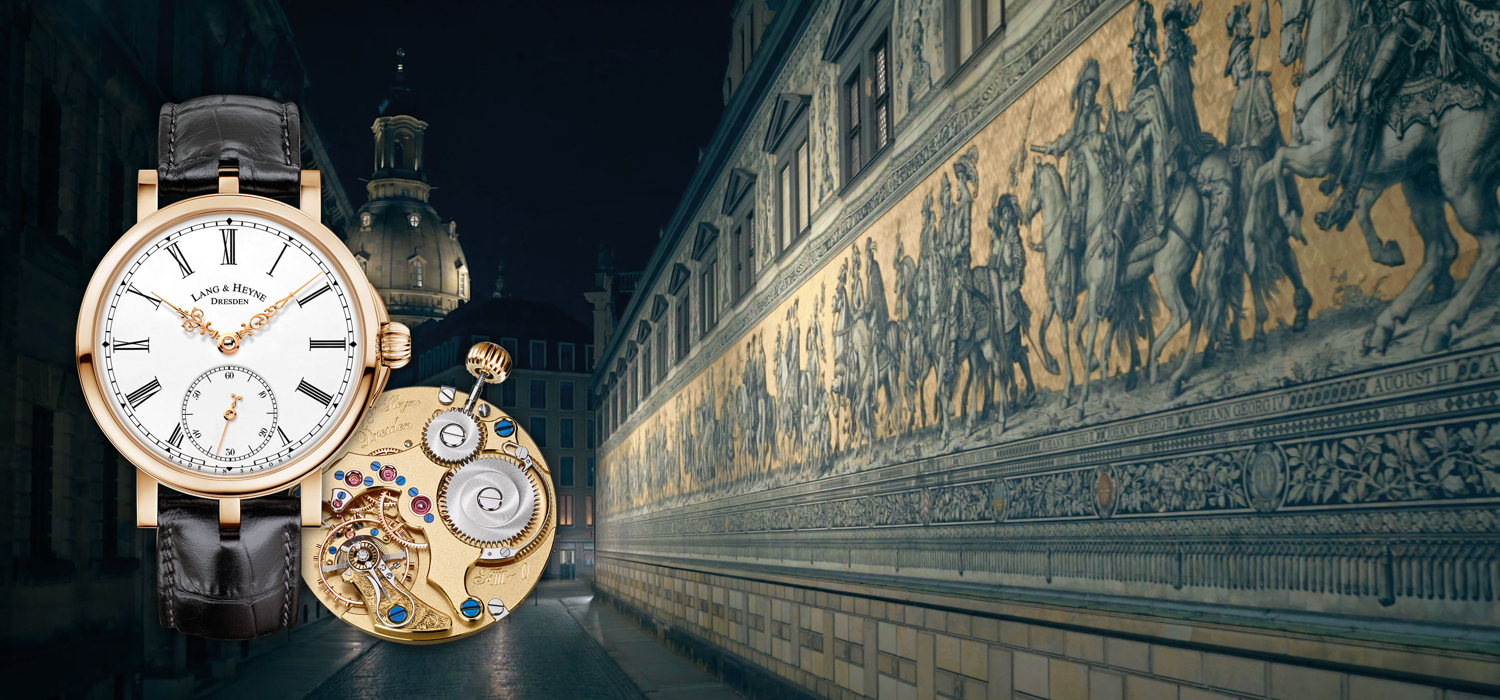
This monumental work was installed on the outside of the stable courtyard of the Dresden Residenzschloss in 1907. Originally designed as a lime painting in 1589, it was redesigned in the 19th century by the history painter Wilhelm Walther. Walther created a detailed master drawing, which was later realized in sgraffito technique. However, the weather took its toll on the artwork and it had to be replaced with porcelain tiles at the beginning of the 20th century.
The production of the tiles was a technical masterpiece. The tiles were painted and fired at the Meissen porcelain manufactory under the supervision of Court Councillor Sturm and later the painter Gruft. The laying work began in April 1907 and was completed in August of the same year.
The Fürstenzug survived the air raids on Dresden during the Second World War almost unscathed. Between 1978 and 1979, the painting was restored and damaged tiles were replaced.
The work of art depicts not only the rulers of the House of Wettin, but also numerous scientists, artists and craftsmen. The detailed depiction includes 94 people, 45 horses and two dogs. Particularly noteworthy are the many small details, such as the different types of weapons and the artistically designed decorative frames with birds and butterflies.
The Fürstenzug is a testimony to Saxon history and craftsmanship that captivates visitors from all over the world.
Picture sponsorship